
Branded sign-in experience
Control the player-facing login, account recovery and launcher navigation without moving password handling into gameplay code.
Game launcher authentication
Keep credentials, login, recovery and account UX in the launcher. When a player starts a game, LauncherForge provides a short-lived launch token that the runtime integration validates before exposing the minimal player session.
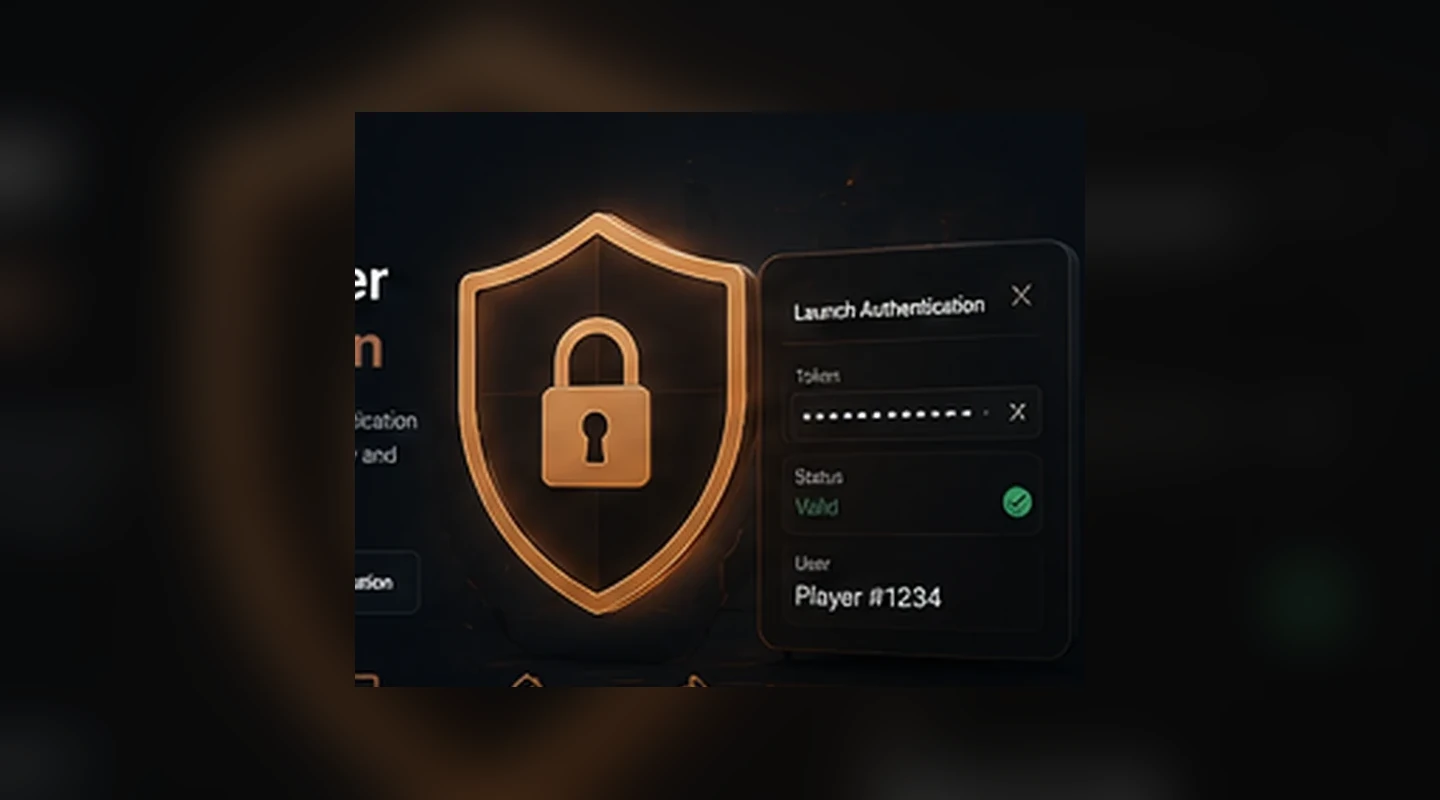
Launcher authentication and game runtime identity solve different problems. LauncherForge keeps the credential flow in the launcher and gives the packaged game a narrow validation contract for each launch.
Authentication boundary
Launcher authentication and game runtime identity solve different problems. LauncherForge keeps the credential flow in the launcher and gives the packaged game a narrow validation contract for each launch.
Control the player-facing login, account recovery and launcher navigation without moving password handling into gameplay code.
Generate a temporary launch session when the player starts the selected game rather than handing the game reusable account credentials.
Validate the launch token from the packaged game through the LauncherForge integration before initializing authenticated gameplay state.
Expose only the runtime values currently required by the game session: id, email and valid.
Use dedicated integration paths for Unreal Engine and Unity while keeping the authentication concept compatible with other runtimes.
Keep player access connected to the launcher, selected game and release workflow instead of treating authentication as an unrelated website login.
Launch session
The handoff is deliberately small so launcher credentials never need to become permanent secrets inside the packaged game.
The launcher owns credentials, recovery and account-facing UI.
The session is temporary and associated with the launch context.
The token travels with the startup flow rather than a password or permanent account secret.
The integration confirms the token and exposes id, email and valid to runtime code.
Small runtime contract
A short-lived launch token reduces the amount of account state the packaged game needs to understand and keeps sign-in UX centralized in the launcher.
POST /launch/validate
token: <short-lived>
response: 200
id: usr_01J8M6GQ
email: player@example.com
valid: true ✓
Connect auth to distribution
The same launcher can resolve player access, the release branch, installation state and the game session that starts afterward.
Launcher authentication FAQ
The goal is to keep account credentials out of the packaged game while still giving runtime code a validated player identity.
No. Password handling stays in the launcher. The packaged game receives a short-lived launch token for validation.
The current minimal runtime contract exposes id, email and valid.
It limits the session handoff to a specific launch flow instead of giving the packaged game a reusable account credential.
Yes. LauncherForge provides an Unreal integration path for validating the launch token after the runtime initializes.
Yes. Unity can use the runtime session integration pattern while the player-facing login remains in the launcher.
// Centralize player sign-in
Use a small validated launch session to connect player identity to the packaged game without duplicating credential flows.