
Hash-based scanning
The deployment workflow calculates SHA-256 hashes for packaged files so release state can be compared deterministically.
Game patcher
LauncherForge scans packaged builds, calculates SHA-256 hashes and reuses unchanged stored objects so each release is represented as an explicit version instead of a manually copied folder.
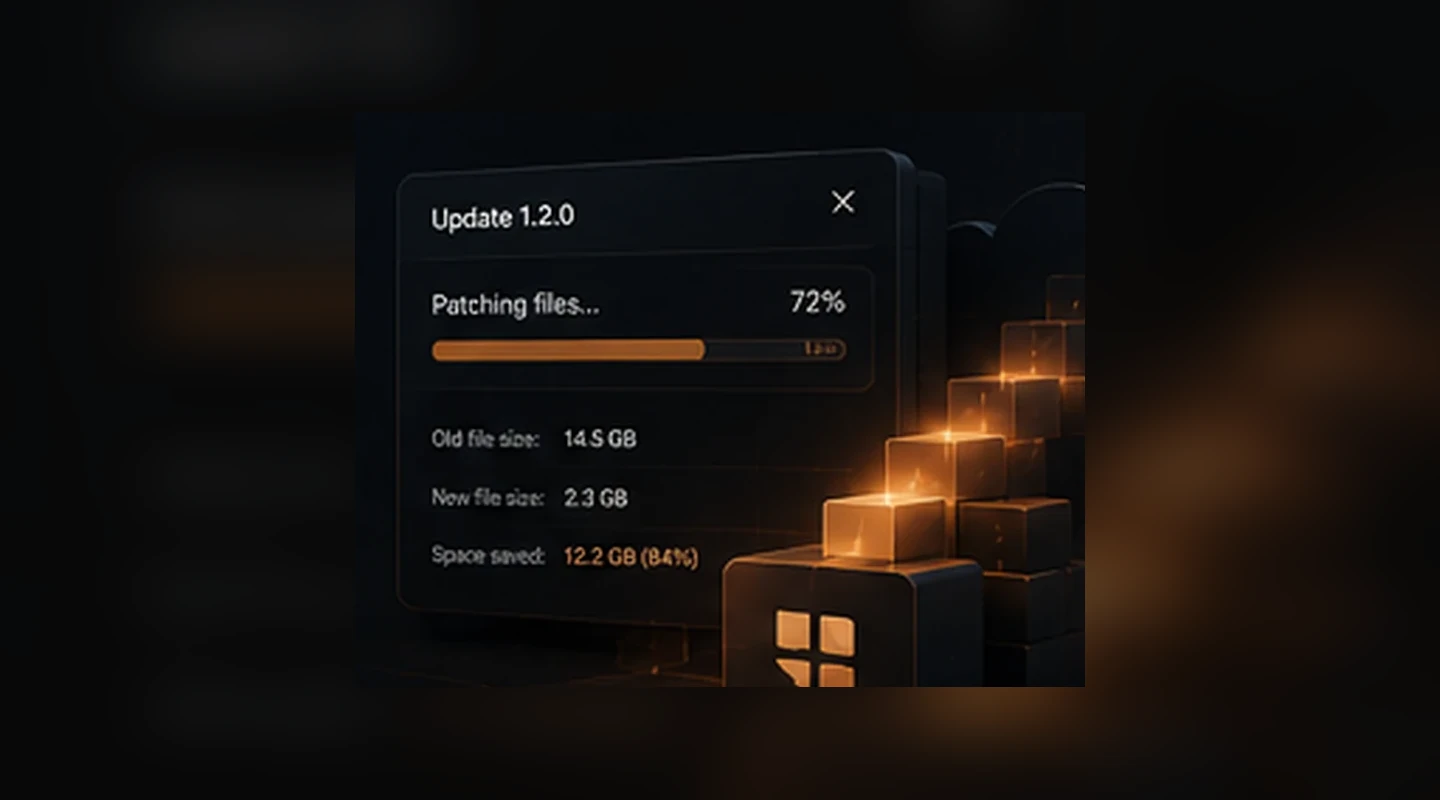
A patching workflow should tell the team what changed, which version is current and where a release is going. LauncherForge connects file scanning, manifests, stored objects and branch-aware publishing.
Patch delivery
A patching workflow should tell the team what changed, which version is current and where a release is going. LauncherForge connects file scanning, manifests, stored objects and branch-aware publishing.
The deployment workflow calculates SHA-256 hashes for packaged files so release state can be compared deterministically.
Files already present in storage can be reused instead of being uploaded again as if every release were completely new.
Each published build has an explicit version and branch destination, creating a release history the team can reason about.
Publish production, beta, alpha or internal builds without mixing testing releases with the version intended for all players.
The player-facing launcher reads the release state for the selected game and branch before deciding what needs to be installed or updated.
Keep publishing reproducible from a developer machine or CI workflow instead of relying on manual file transfer steps.
Patch workflow
The release process stays explicit from the packaged build on disk to the version visible to the launcher.
Walk the game files and calculate deterministic SHA-256 hashes.
Keep unchanged content associated with existing stored objects and identify what the new build requires.
Publish the manifest and build metadata to the intended release branch.
The launcher checks release state and brings the local installation to the required build.
Deterministic builds
A content hash gives the release pipeline a stable identity for each file and lets storage reuse be based on the file content itself.
scanning 84,231 files
calculating SHA-256 hashes
unchanged objects: reused
changed objects: queued
manifest: generated
version 0.9.5 published ✓
Related release workflows
Patching is one part of the release pipeline. Automatic updates and branch selection determine how those versions reach players.
Game patcher FAQ
LauncherForge treats a game release as a versioned manifest and delivery workflow rather than an untracked upload.
Yes. The deployment workflow calculates SHA-256 hashes while scanning packaged build files.
The workflow is designed to reuse unchanged stored objects when their content is already available, avoiding a full blind re-upload for every release.
Yes. Teams can separate production from private QA, beta or internal branches and publish the build to the intended channel.
The CLI-oriented workflow is intended to make publishing reproducible from local development machines or CI environments.
Yes. The launcher UI is the player-facing surface, while build scanning, versioning and delivery are release infrastructure underneath it.
// Make releases traceable
Publish explicit versions, keep testing branches separate and let the launcher resolve the release players should receive.